Conferences and Events
The conferences and events listed below are those regularly hosted at Yale. To stay informed of campus events, visit the Student resources.
Centers, Programs, and Initiatives
The following centers, programs, and initiatives offer a myriad of ways to engage in research, fieldwork, training, and events related to food systems and agriculture. The resources listed here include both those housed at YSE and those at other areas of Yale University.
-
Yale Sustainable Food Program
The Yale Sustainable Food Program serves as a hub for creative and critical work on food and agricultural systems topics that are entangled with pressing problems of global significance. YSE students can get involved with YSFP through the Agroforesters-in-Residence program at the Yale Farm, or explore food systems further afield with the Global Food Fellowship. -
Yale Center for Business and the Environment (CBEY):
From conservation to regenerative agriculture, CBEY's programmatic focus on Thriving Food Systems and Nature-Based Solutions supports responsible stewardship of our planet's resources. Programs in CBEY's Thriving Food Systems and Nature-Based Solutions include the Regenerative Agriculture Lab, Shifting Power & Resources: Equity and Justice Work in Practice discussion group, and Corporate Water Risk and Strategy Workshop.
CBEY Food Systems and Agriculture highlights:
Bridging the Regenerative Agriculture Financing Gap — Issue brief authored by two MEM/MBA dual degree students
Reparative Investing and Due Diligence with Black Farmer Fund — Students in the Regenerative Agriculture Lab produced this explainer on reparative investing based on their work with the Black Farmer Fund.
-
Environmental Leadership Training Initiative (ELTI):
ELTI trains and supports people in restoring and conserving tropical forest landscapes using strategies that support biodiversity and livelihoods. Many of ELTI's projects involve collaboration with the agricultural sector, and include topics such as agroecological restoration, intensive silvopastoral systems, riparian buffer zones, and farmer empowerment. -
Yale Forests:
The Yale Forests are a living laboratory for teaching, management, and research. The Forests span over 10,000 acres of forestland across three New England states. -
Justice, Equity, Diversity, and Sustainability Initiative (JEDSI):
Examining the relationship between social inequalities, lived experiences, and environmental outcomes, JEDSI focuses research, teaching, and practice on our environmental history, diverse voices in the environmental movement, and better pathways forward. One of eight primary areas of research, JEDSI's Food and Farming focus offers opportunities to engage with issues of food access, food sovereignty, and food justice. See JEDSI's food system research here. -
Law, Ethics & Animals Program (LEAP):
LEAP at Yale Law School is a multidisciplinary think-and-do tank dedicated to: (1) drawing the attention of leading thinkers and doers to the deep questions of conscience and law that human-animal relationships and industrialized animal cruelty raise, and (2) empowering Yale University scholars and students to produce positive legal and political change for animals, people, and the environment upon which they depend. Initiatives include the Climate Change & Animal Agriculture Litigation Initiative, CAFE Lab, LEAP Student Fellows Program, and more. -
Yale Center for Environmental Justice (YCEJ):
Developing tools, networks, and interdisciplinary research, the Center for Environmental Justice empowers frontline communities to lead the charge for environmental justice at the local, national, and global levels. YCEJ supports research and resources around land and climate justice, including agriculture and food systems. See YCEJ's Land Justice & Land Trust Toolkit -
Ucross High Plains Stewardship Initiative
Ucross is focused on stewardship and conservation of the American West. Through teaching, research, and outreach, students develop knowledge and skills related to land management and conservation on private and public lands of the West. Students often work with ranchers on issues related to working lands. For example, Ucross research assistants explored a payment for ecosystems services model in partnership with the Colorado Cattlemen's Agricultural Land Trust. -
Yale Macmillan Center, Program in Agrarian Studies:
The Program in Agrarian Studies at Yale is an experimental, interdisciplinary effort to reshape how a new generation of scholars understands rural life and society. The program hosts a weekly Agrarian Studies Colloquium during the academic year. -
Tsai Center for Innovative Thinking at Yale:
The Tsai Center For Innovative Thinking (CITY) is an innovation center that serves students from across Yale's culture through programs, funding, and mentoring. Tsai CITY partnered with CBEY to start the Planetary Solutions Generator, a six-week intensive program that offers Yale students the opportunity to explore solutions to a planetary program and their real-world application. Food, agriculture, and land use are key areas of interest for planetary solutions. -
Yale Center on Climate Change and Health (CCCH):
The Yale Center on Climate Change and Health utilizes research, education, public health practice, and service to help achieve a world with a stable and safe climate; one in which the public's health and diverse ecosystems can thrive. CCAH's work addresses interdisciplinary topics, including how food insecurity and undernutrition are impacted by climate change. -
Yale Center for Ecosystems & Architecture (CEA):
The Yale Center for Ecosystems & Architecture explores the interaction between plants, animals, and the environment to radically transform the way we design energy, water and built infrastructures. One of CEA's core areas of research is food and includes ongoing investigation of the synergistic relationships between food growing, plants and the bioremediation of food and water systems. -
Yale Forest Forum (YFF):
The Yale Forest Forum serves as the hub of communications and engagement for The Forest School, bringing together a diverse group of leaders in forestry and forest policy through regular events and programs. Past initiatives include the Program in Tropical Forestry and Agroforestry, which is focused on research, education, and promotion of biodiversity conservation, reforestation, and agroforestry.
Farms and Gardens at Yale
Looking to get your hands dirty in food and agriculture at YSE? There is ample opportunity to dig in (literally and figuratively!) at these growing spaces at Yale.
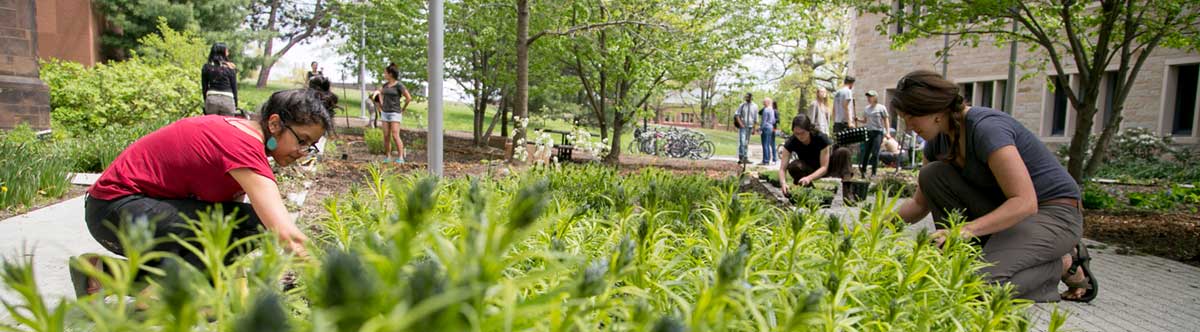
Kroon Forest Garden
The Kroon Forest Garden was started in 2016 by students, faculty, and staff at YSE in partnership with Yale Facilities. This garden features native plants and provides both an educational and demonstration space for the community to experience, learn from, and enjoy.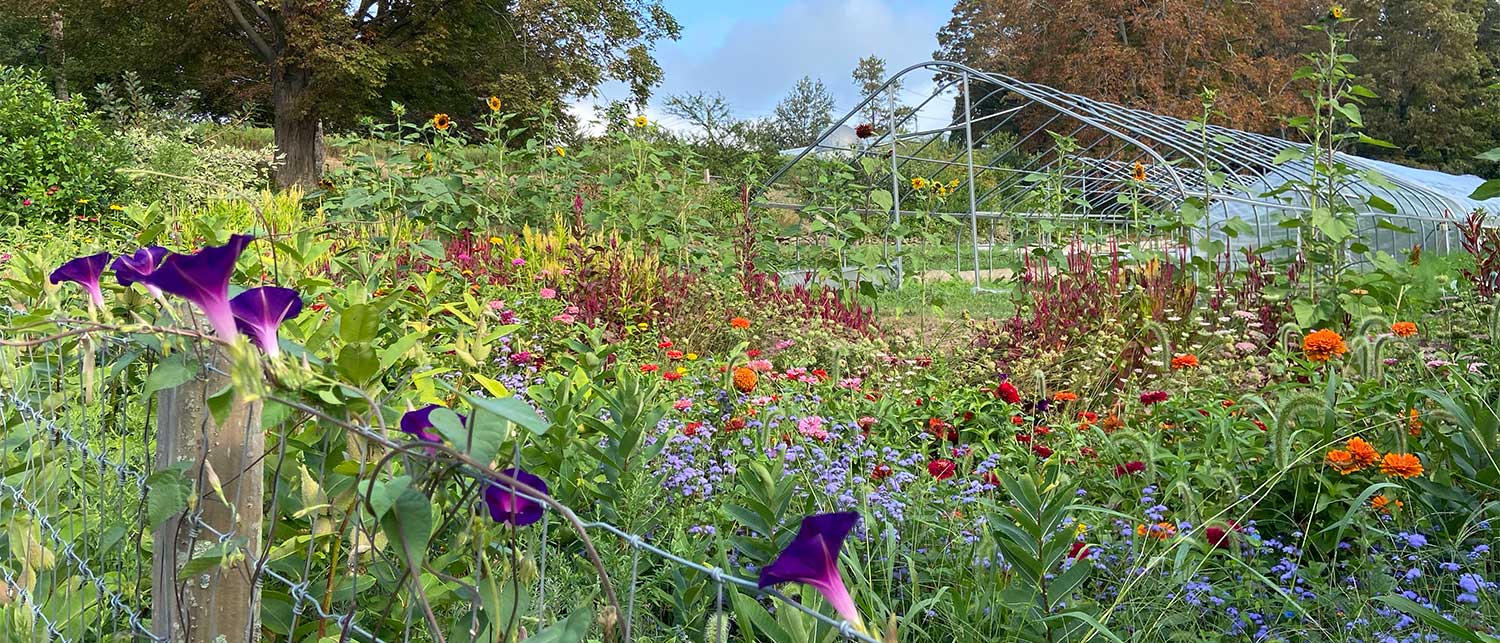
The Yale Farm
A not-so-hidden gem on Science Hill, the Yale Farm grows hundreds of food, fiber, dye, fuel, and floral crops ranging from staple grains to saffron crocuses, from ancient landraces to modern hybrids. The Yale Farm changes from season to season to reflect the evolving interests of the students who learn and work there. In its role as an outdoor classroom, the Yale Farm can help to enrich, clarify, deepen, and vivify in-classroom texts and discussion holding to Yale’s rigorous academic standards. In its role as a gathering place, the Yale Farm has intentionally cultivated an atmosphere of spontaneity, warmth, generosity, and inclusivity. As a result, their Open Workdays, presentations, and pizza events are highly sought after by students, faculty, and staff. Students involved with the Yale Farm often refer to it as a sanctuary: a place where they may find reprieve from crushing expectations, a renewed sense of practical purpose in their work, and an affirmation of their belonging within a larger community.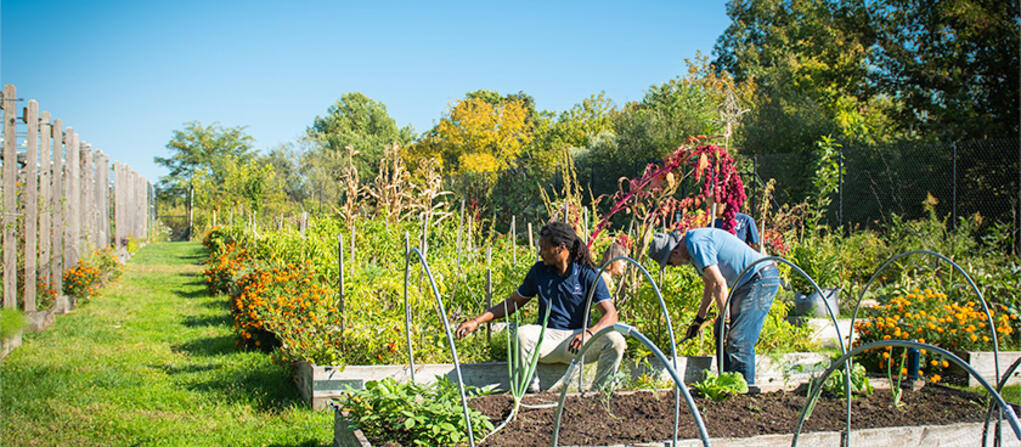
West Campus Farm
Managed by Yale Hospitality, this quarter-acre farm promotes sustainable food literacy by providing opportunities for the Yale West Campus community to grow, prepare, and engage with food from both an agricultural and culinary perspective. Community members can connect with West Campus Farm Integration Manager Jordan Williams to learn more about volunteer opportunities, join the farm’s newsletter, and anything else related to the West Campus Farm.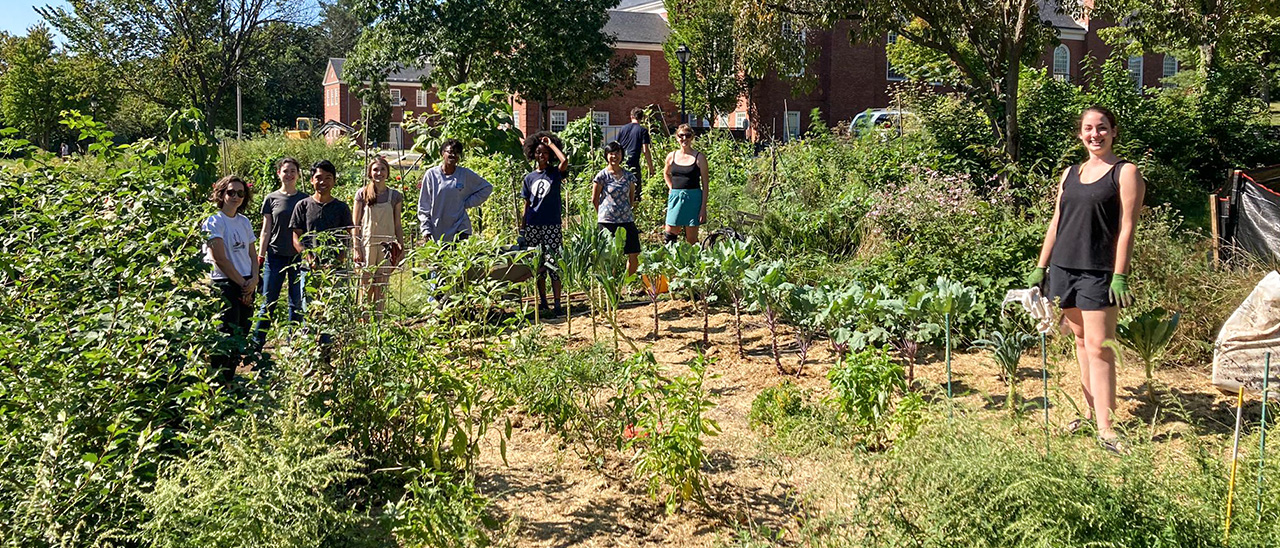
Yale Divinity Farm
The Yale Divinity Farm, affectionately called DivFarm, is a student-led community garden where members tend communal herb and vegetable plots, blackberry and raspberry hedges, native and pollinator plantings, and fruit-tree orchards. Founded in 2009, students have nurtured this farm as an organic, no-till, and regenerative agricultural system where students can receive horticultural training and practice their eco-spiritualities.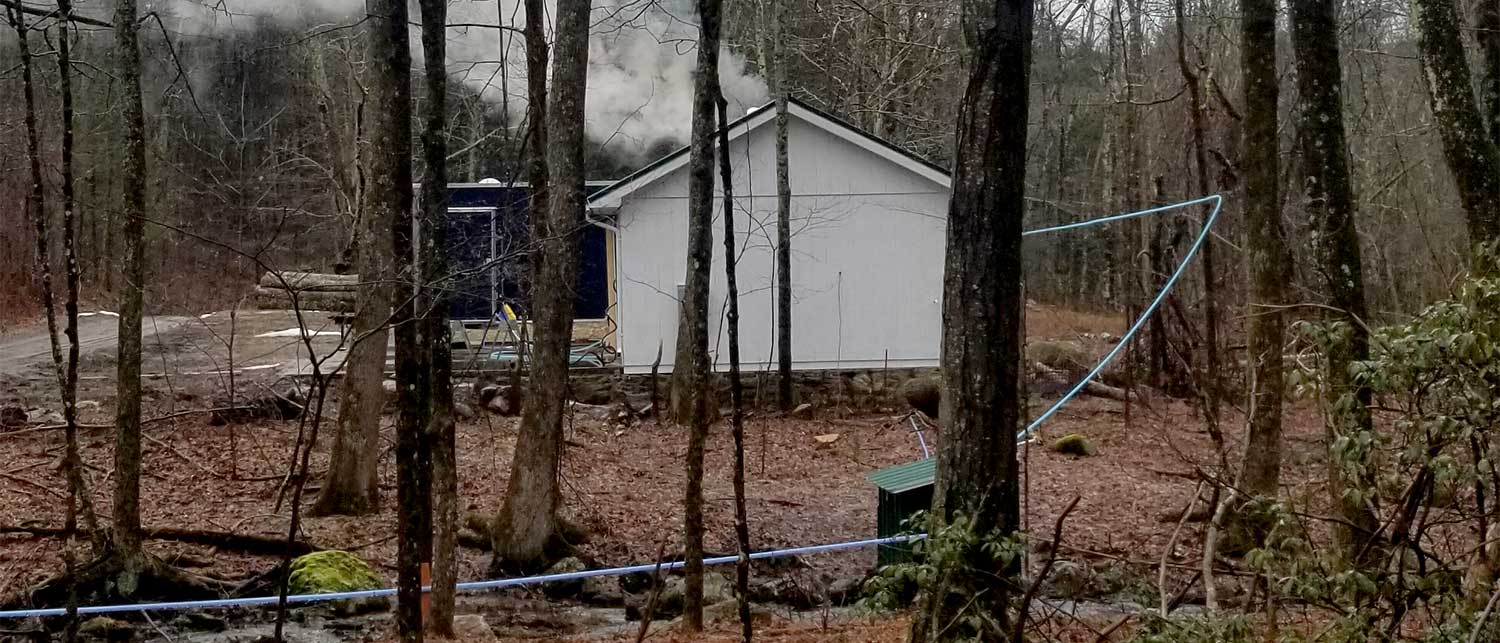
Yale Forests’ Maple Education & Extension Program
Yale Forests’ Maple Education & Extension Program is designed to be a resource for sustainable maple production for aspiring sugar producers and backyard enthusiasts alike, across Southern New England. Pure maple syrup is produced by faculty and students at Yale-Myers Forest.
Marsh Botanical Garden
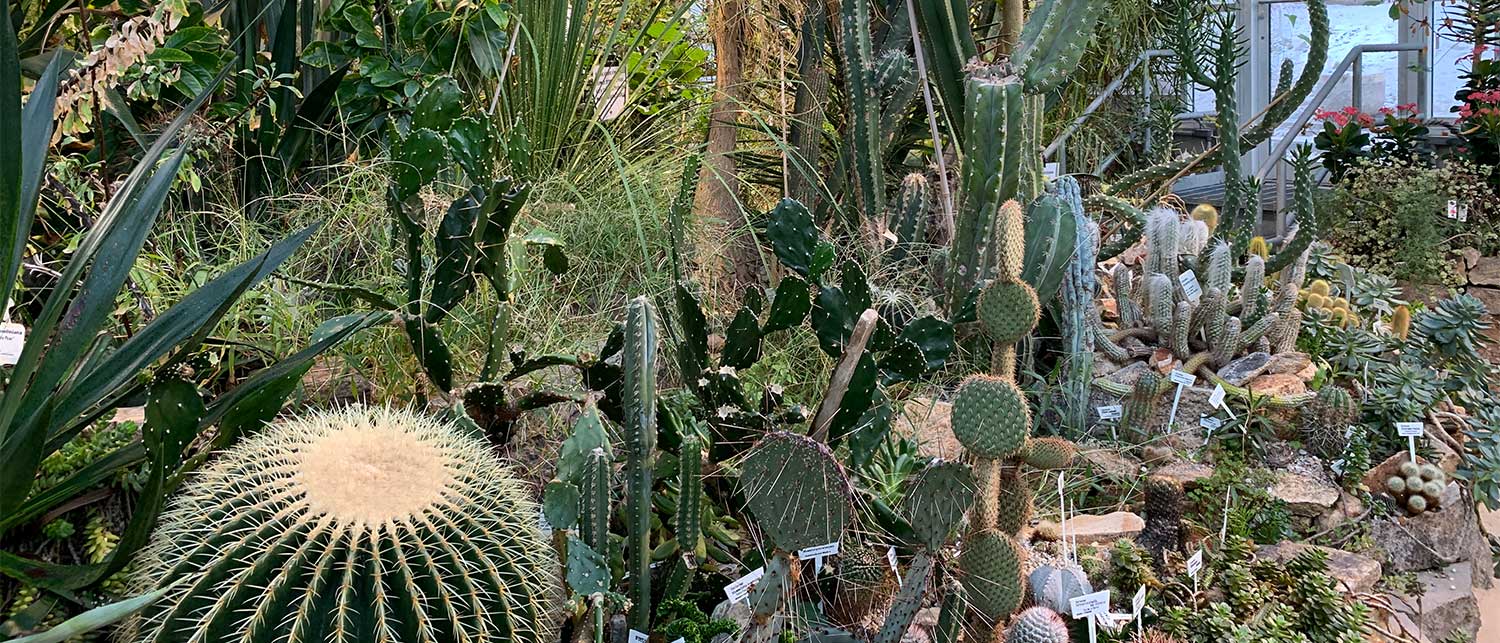
Sitting on eight acres, with six greenhouses comprising around a third of an acre under glass, Marsh Botanical Garden offers support for researchers, faculty and students at Yale, as well as an informative and eye-catching experience for visitors. Several Yale School of the Environment courses, as well as classes in the Molecular, Cellular and Developmental Biology (MCDB) and Ecology & Evolutionary Biology (E&EB) departments utilize the Marsh Botanical Garden’s spaces and collections.
Food Systems » Resources